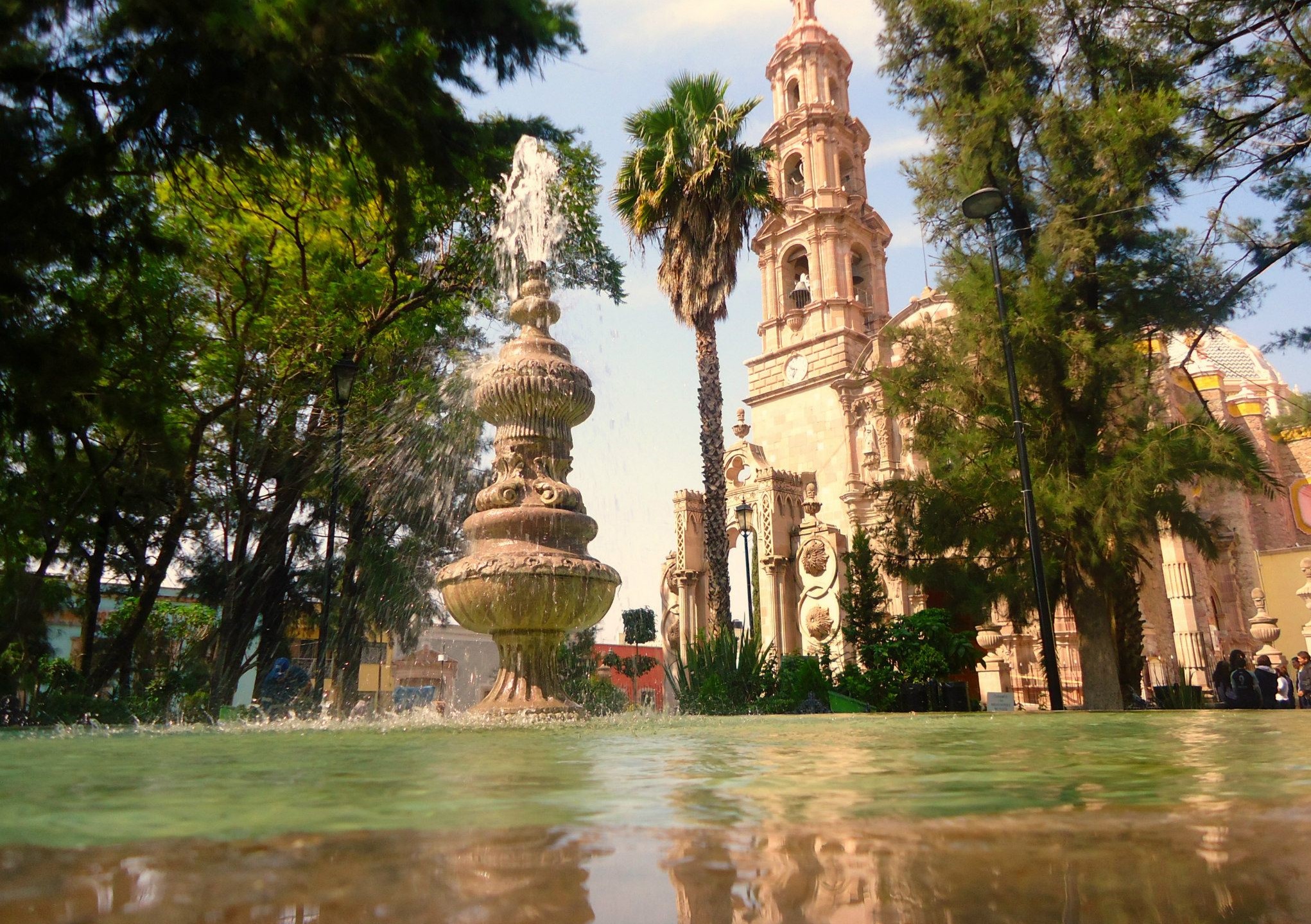
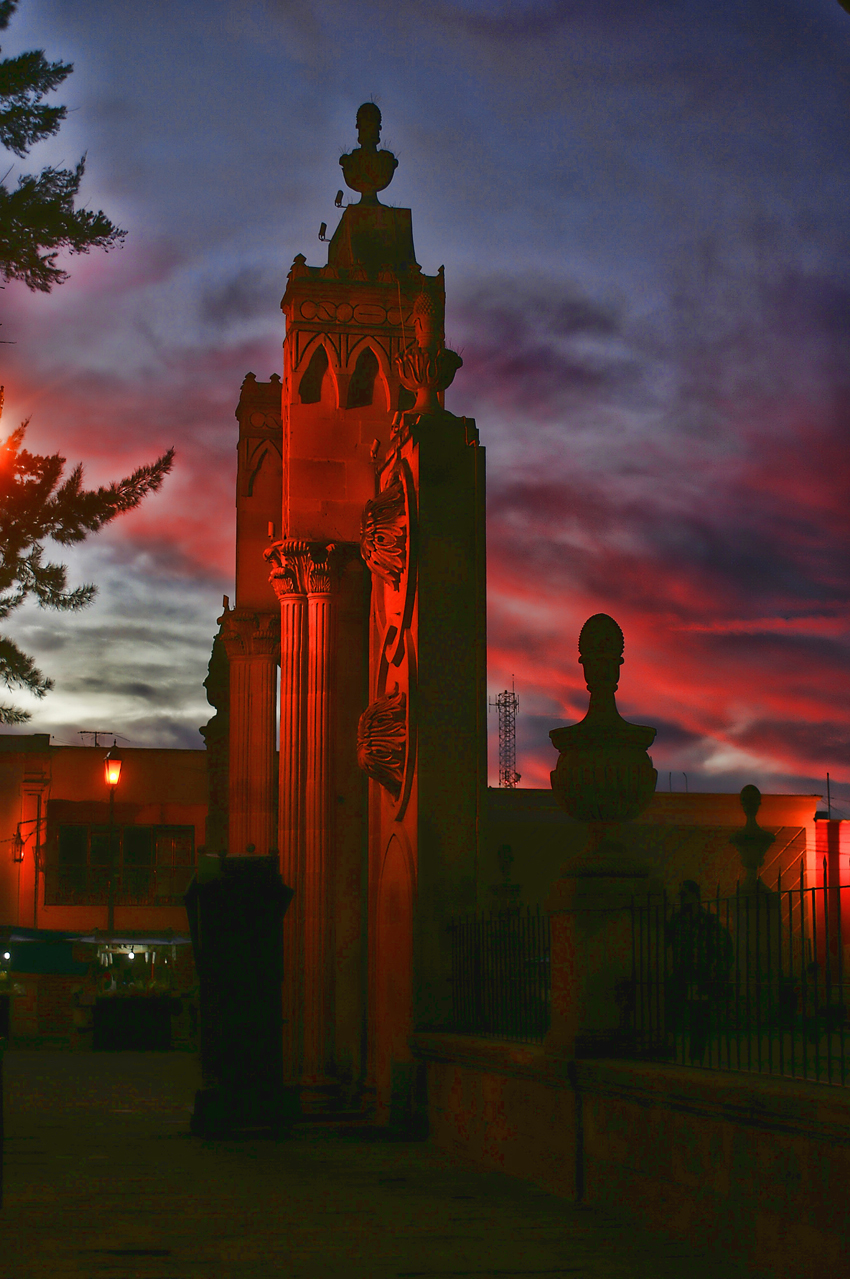
Temple of the Señor del Encino
The priest Mateo José de Arteaga obtained the lot to build a chapel, which was probably dedicated to the Archangel Saint Michael, on October 4, 1764. The construction of the current temple began on January 12, 1773. The church was dedicated to the Lord of the Oak, on March 10 and 11, 1796.

Every year on November 13th, popular fervor overflows in honor and glory of the Black Christ of the Oak, as his miraculous apparition is commemorated. It is said that a resident of the city, while cutting down the trunk of an oak tree, found the image of Jesus Christ inside.
On June 19, 1854, the church was established as a parish. A public repeating clock was installed on February 19, 1878.

The temple is located in the heart of one of the oldest and most traditional neighborhoods in Aguascalientes, El Barrio de Triana/El Encino.
The building has architectural characteristics typical of the late 18th century; that is, it belongs to the last manifestation of the Baroque, in its estípite form, and already displays some characteristics of Neoclassical architecture, mainly in the three-story tower.
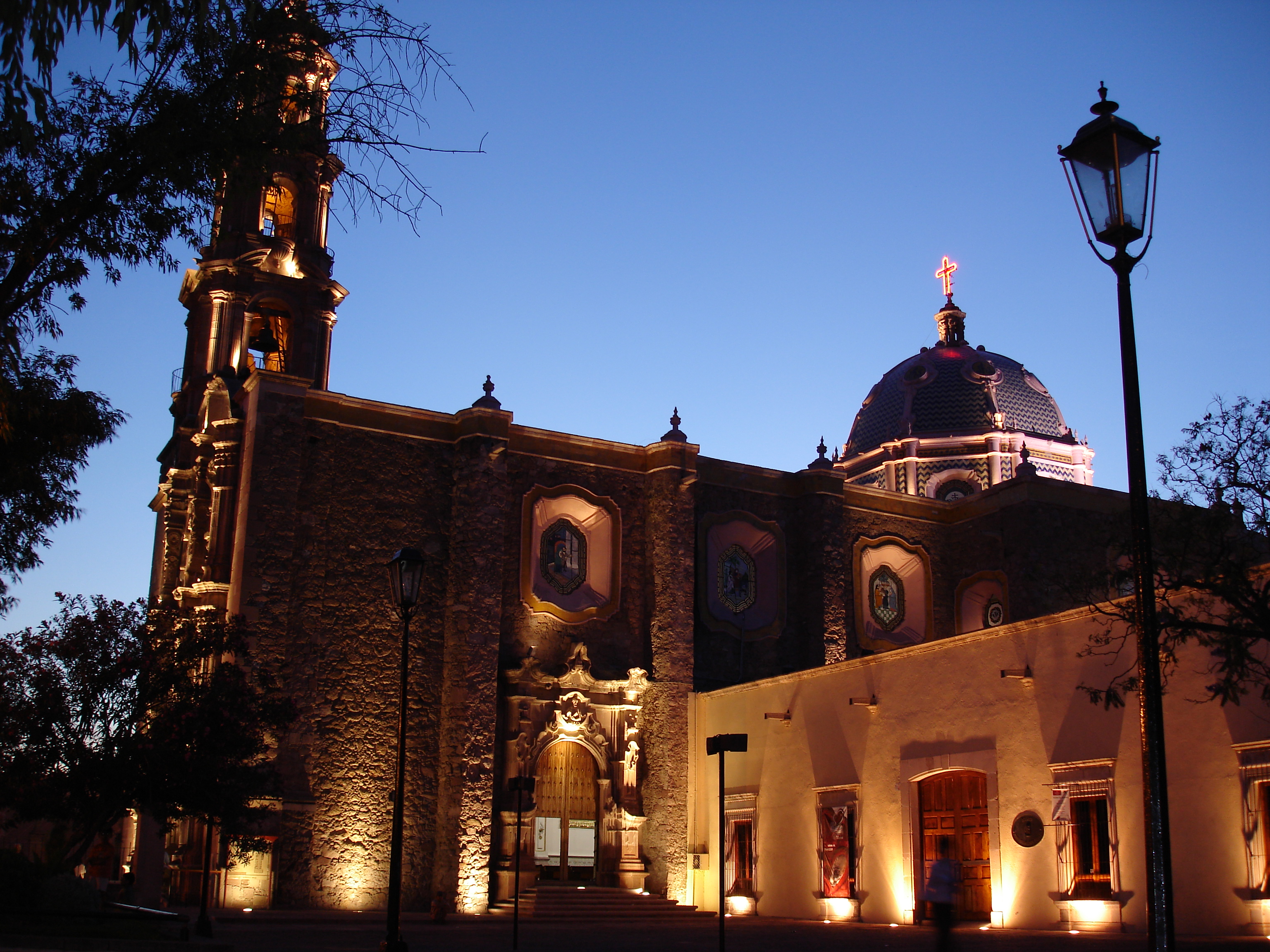
The extraordinary large paintings on the side walls are striking. These are the Stations of the Cross, a collection of paintings created in 1798 by the master Andrés López.
The Garden of the Oak or Garden of Peace was officially inaugurated on September 16, 1890. It has a tile inscription commemorating both the founding of the Triana neighborhood, which took place on June 7, 1565, and its first settler: Don Hernán González Berrocal. It consists of a small wooded garden with pine trees, palm trees, and some flowers. It is decorated with iron benches and a central fountain with tiles (apparently installed in 1882) with drawings of birds and plants. Its appearance is very reminiscent of the gardens of Seville, Spain.